Postage is typically the largest single line item in any direct mail campaign. Unlike printing, which you can value-engineer with paper choices and quantities, postage is determined by rules you don’t set - USPS physical standards that classify your piece before a single stamp is applied.
The good news: those rules are knowable in advance. Design your piece to the right specifications and you pay the lowest available rate for your format. Design outside those specs - even by a fraction of an inch - and you pay significantly more, or your piece gets returned.
This guide covers the three main mail formats used in direct mail campaigns, the physical standards that govern each, and the addressing requirements that apply to all of them.
Designing to the wrong specifications is one of the most common and most avoidable sources of unexpected costs in direct mail. Request our templates before you send your piece to print - it takes minutes and can save hundreds of dollars on a single campaign.
The Three Standard Mail Formats
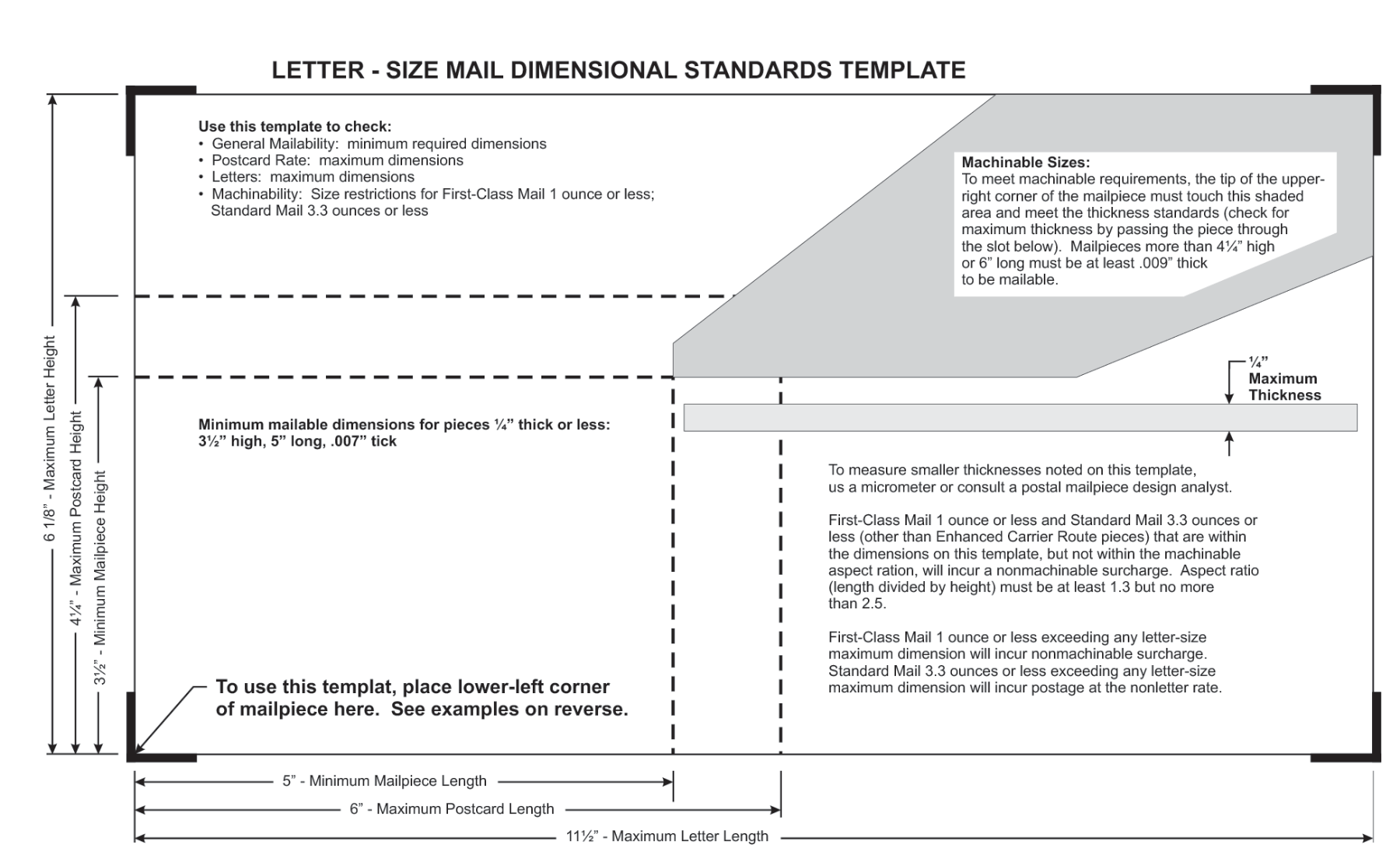
| Dimension | Minimum | Maximum |
|---|---|---|
| Height | 3.5″ | 6.125″ |
| Length | 5″ | 11.5″ |
| Thickness | 0.007″ | 0.25″ |
| Aspect ratio (length ÷ height) | 1.3 | 2.5 |
| Weight (single sheet) | — | 3 oz |
| Weight (in envelope) | — | 3.5 oz |
Pieces outside these dimensions are classified as flats or parcels and mailed at higher rates. The aspect ratio requirement - length divided by height must be between 1.3 and 2.5 - is the specification most commonly missed in design files.
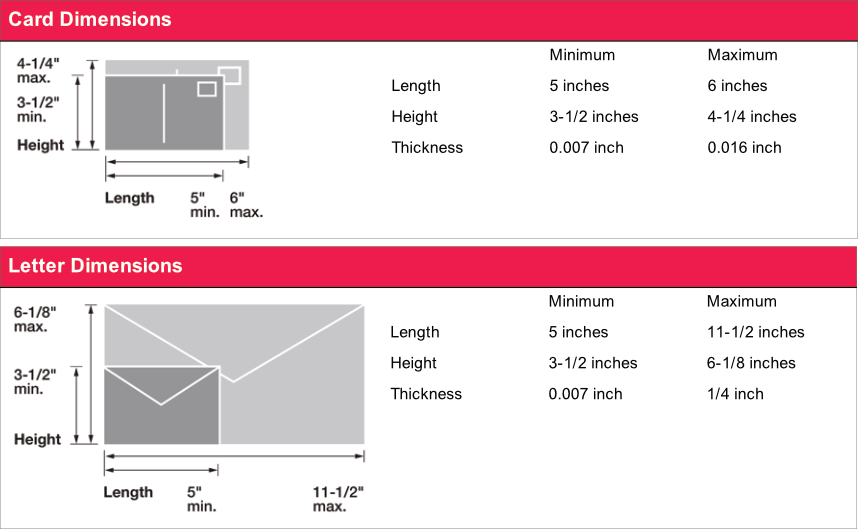
| Dimension | Minimum | Maximum |
|---|---|---|
| Height | 3.5″ | 4.25″ |
| Length | 5″ | 6″ |
| Thickness | 0.009″ | 0.016″ |
| Aspect ratio (length ÷ height) | 1.3 | 2.5 |
To qualify for the postcard rate - the lowest available First-Class postage - your piece must fall within all of these dimensions simultaneously. A card that exceeds the 4.25″ height or 6″ length limit is classified as a letter and mailed at the letter rate. Thickness outside the 0.009″ - 0.016″ range also disqualifies the piece from the postcard rate.
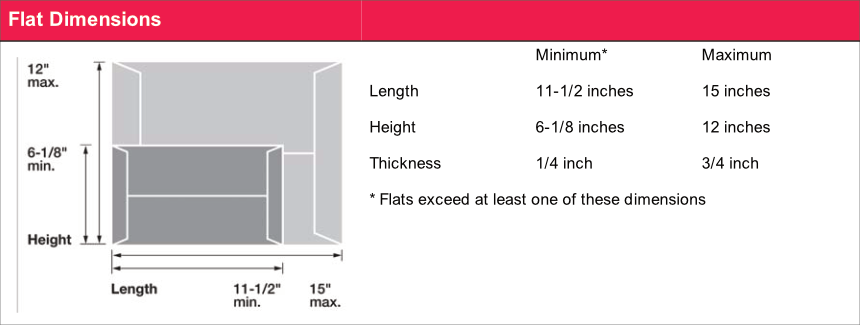
| Dimension | Minimum | Maximum |
|---|---|---|
| Height | 6.125″ | 12″ |
| Length | 11.5″ | 15″ |
| Thickness | 0.009″ | 0.75″ |
| Weight (First-Class) | — | 13 oz |
| Weight (Marketing Mail) | — | 16 oz |
Flats command attention in the mailbox simply because of their size - they’re impossible to overlook. The trade-off is higher postage per piece. For campaigns where impact is the priority and the per-piece economics support it, flats are hard to beat.
Addressing Requirements
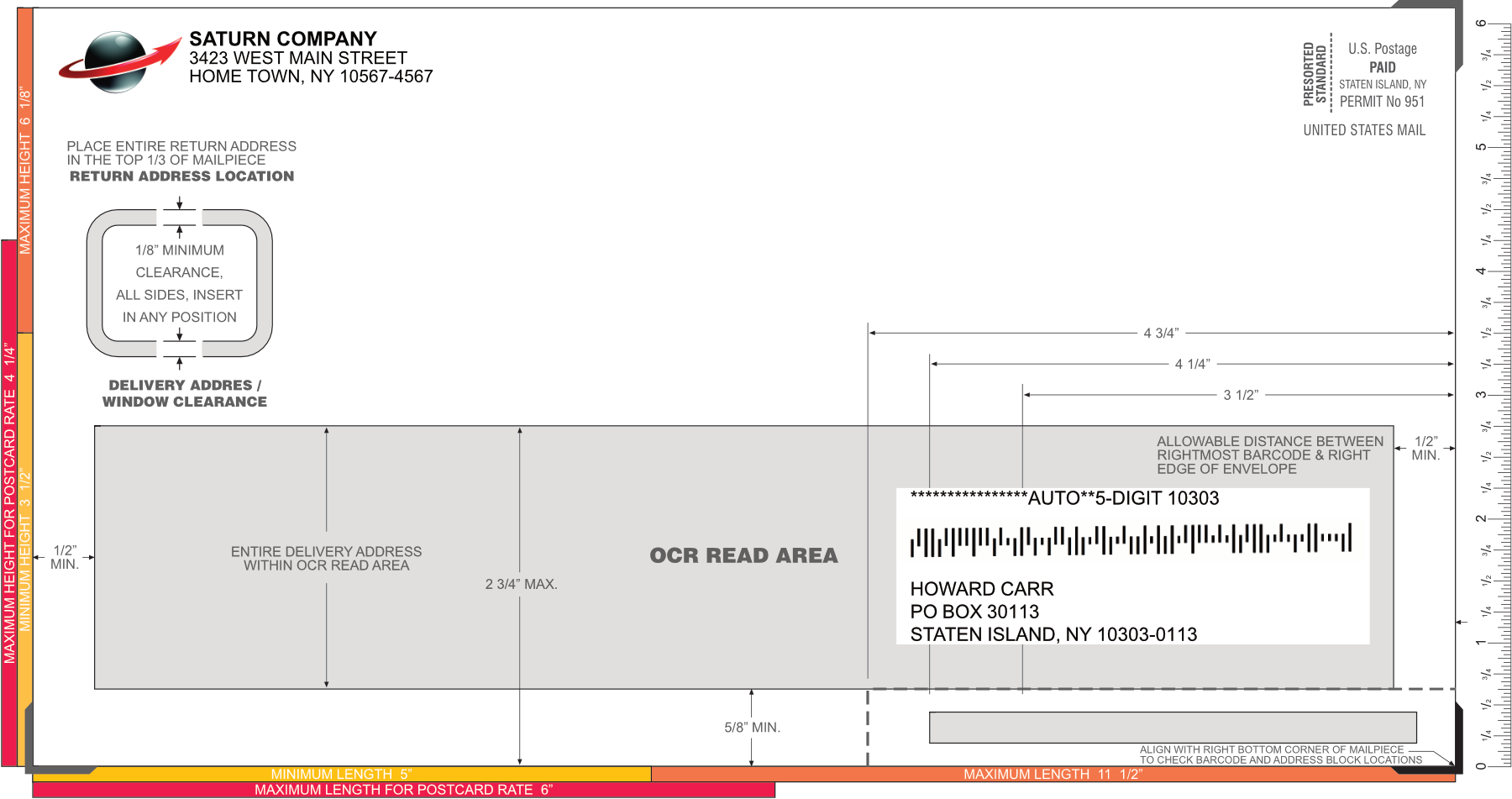
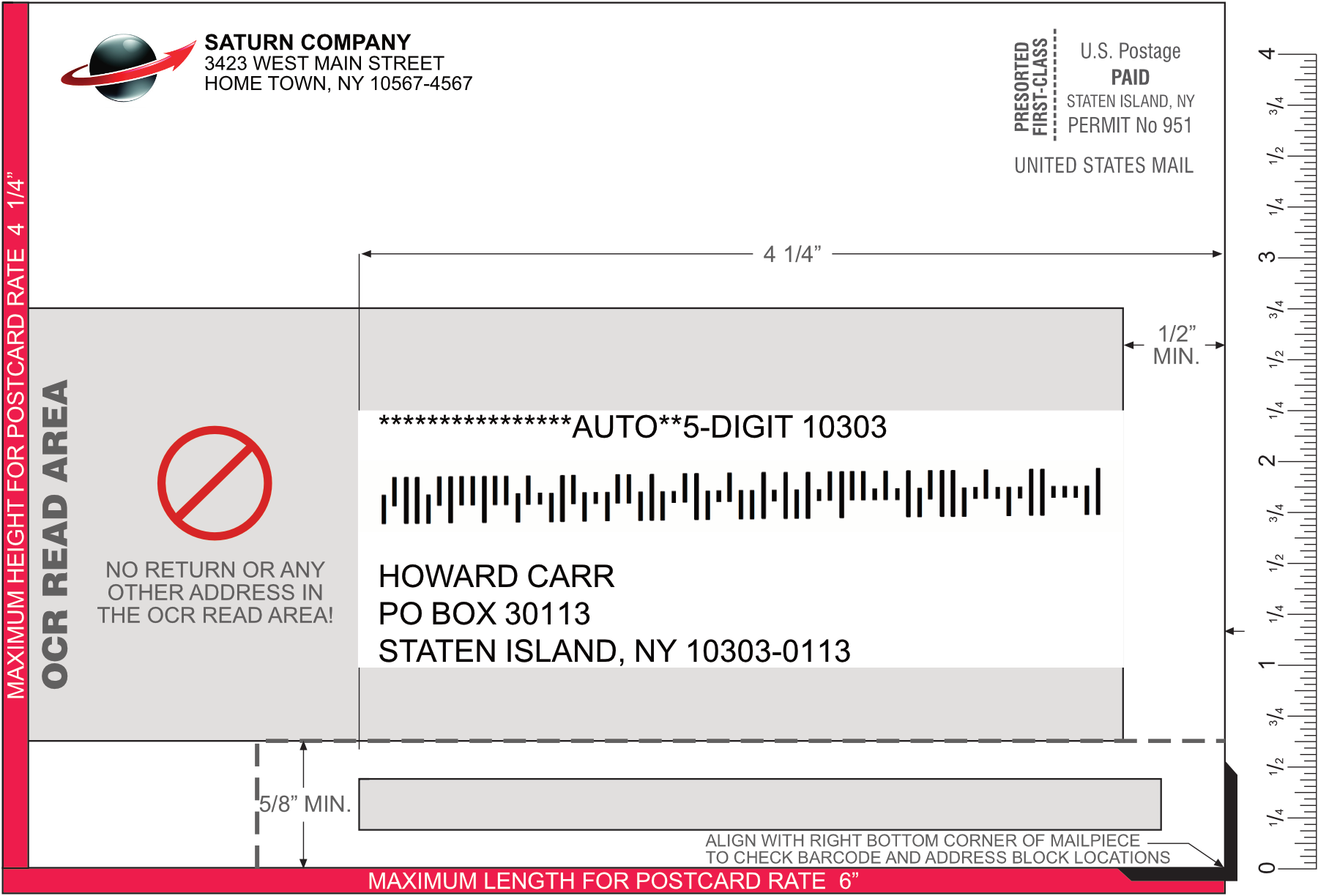
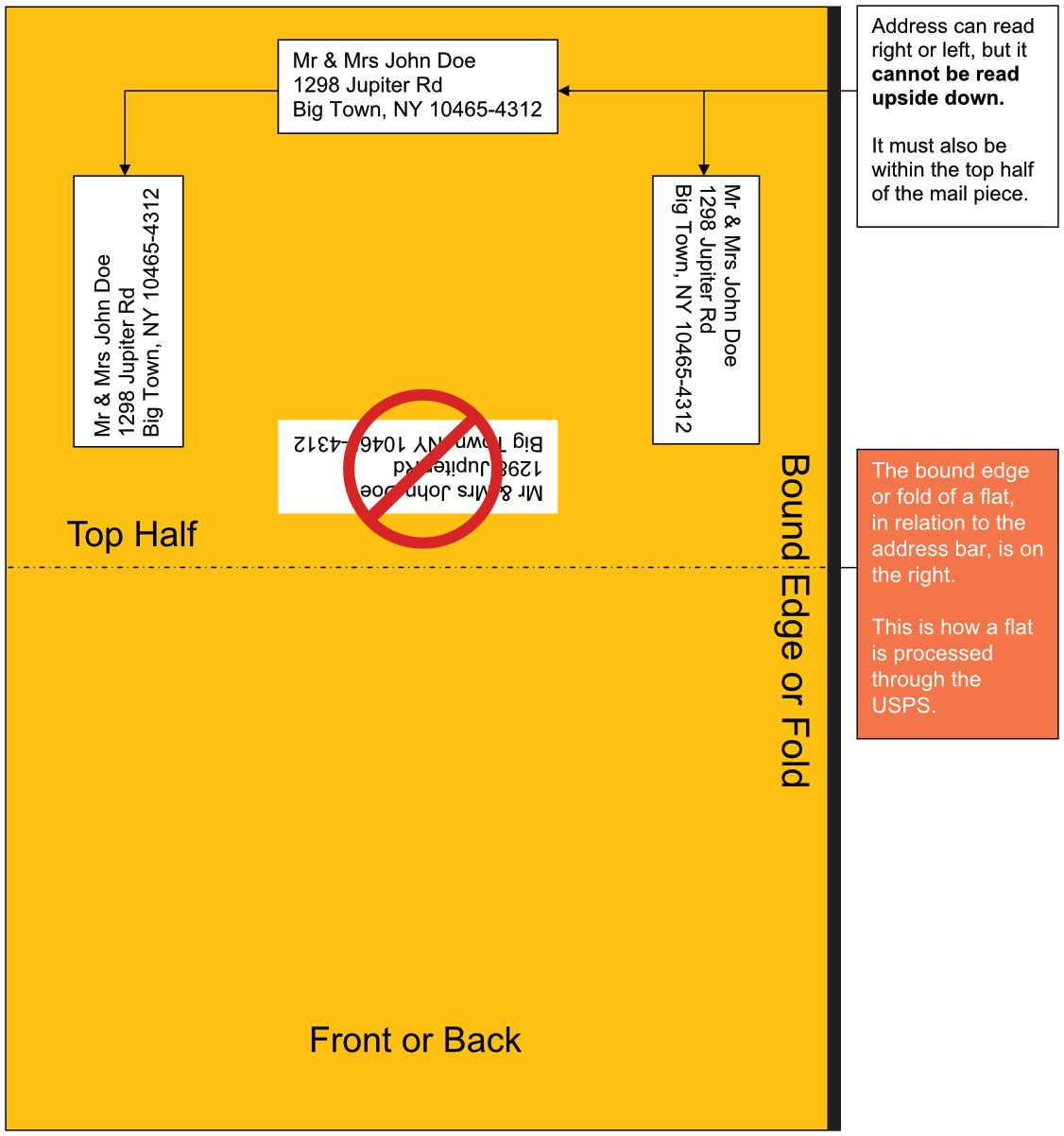
All three formats share the same addressing zone requirements. The address block must be positioned correctly for USPS automated processing - pieces outside these requirements may be sorted by hand, incurring additional fees, or returned.
Design Decisions That Affect Your Rate
Several specific design choices can push a piece from a lower postage category into a higher one - or add a non-machinable surcharge that negates any savings elsewhere.
- Clasps, buttons, or rigid items make a piece non-machinable and add a surcharge regardless of size.
- Square or nearly-square shapes often fall outside the 1.3 - 2.5 aspect ratio requirement and are assessed a surcharge.
- Poly bags or bubble wrap change the thickness classification of an otherwise letter-size piece.
- Folded self-mailers have additional closure requirements - tabs or glue dots must be positioned correctly or the piece fails processing.
- Paper stock too thin for the postcard category (under 0.009″) causes the piece to be classified as a letter despite its dimensions.
The simplest way to avoid all of these surprises: ask for our templates before you design, and submit the file for review before you send it to print. A spec check costs nothing. Reprinting a job that fails USPS processing costs everything.